• Home
  • About
  • Fremantle to Freedom/Events
  • Australian Fenians
  • The Books
    • Fenianism
    • Fenianism in Australia
  • Doco's/Photos
  • Blog
  • Links
  • Contact
  • Home
  • About
  • Fremantle to Freedom/Events
  • Australian Fenians
  • The Books
    • Fenianism
    • Fenianism in Australia
  • Doco's/Photos
  • Blog
  • Links
  • Contact

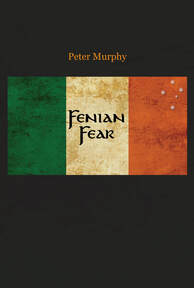
Fenian Fear
The Books

Fenian Fear, Fenian 63, Fenian Hunter, and Fremantle to Freedom
By Peter Murphy and Fred Rea
or Fictional history inspired by true events and real characters 
​
Published by Peter Murphy and Fred Rea of TNC Publications, Perth, Western Australia. 

Fenian Fear: introduction 
In 2014, due to my Australian/Irish background, I began researching for a book (Irish Lives in Australia) those contributions Irish people - had down the decades - made to the fabric of Australia’s heritage and culture. And although I uncovered hundreds of stories and anecdotes relating to amazing gold-finds, engineering, aviation, maritime, agriculture, building, rebellion, religion, politics, art, music, literature, drama, sport, war and peace, nothing intrigued me more than those of a group of unwilling Irish immigrants known as Fenians, and the role they would play in helping shape the fabric of Australian society. However, there was one particular story that stood out from the rest, and which still resonates to this day: the attempt on the life of Queen Victoria's second son, Prince Alfred, Duke of Edinburgh, at Clontarf, Sydney, Australia, March 1868 by Irishman and alleged Fenian assassin Henry James O'Farrell.

During O’Farrell’s trial, it was claimed by his prosecutor that his murderous act was the work of a desperate Fenian killer, while his defense counsel claimed his crime was carried out by a man bereft of any legal or moral responsibility. Once O’Farrell had paid the ultimate price for his crime, much evidence of his true state of mind when he committed his crime would surface later; albeit far it too late to save his neck.    

And while much has been said and written on an incident that would shake the very foundation of the British Empire, very little is still known about exactly who Henry James O’Farrell was, including his true motivation for wanting to murder a member of the Royal family.
In endeavour to help understand more about O’Farrell and his motive for wanting to murder a member of the Royal family, I decided to put on hold my research on ‘Irish Lives in Australia’ and concentrate more on the O’Farrell story itself by self-publishing Fenian Fear. However, where I’ve deviated from your regular ‘history book’ is I decided to play ‘devil’s advocate’ and do my best to get inside O’Farrell’s deranged mind and tell his story ‘from the inside out’.  I’ve also taken liberty in exploring O’Farrell’s prison confidant, Father Thomas Dwyer, including the role he played in the whole murky affair. And although a work of fiction based on true historical events, Fenian Fear is a timeless story that echoes even louder today; especially during a time when our civil liberties are constantly under threat from conservative political forces.

Fenian Fear I hope will encourage the reader to, read more widely, see more clearly, think more deeply and challenge themselves.

Fenian Fear: $20 ( + Postage) can be ordered by emailing: [email protected] 
Copies can also be purchased at Fremantle Prison Souvenir Shop, Fremantle, Western Australia, and Bunbury Museum and Heritage Centre, Bunbury, Western Australia. 
 
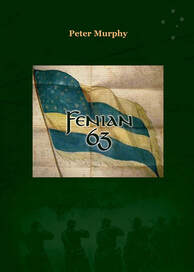
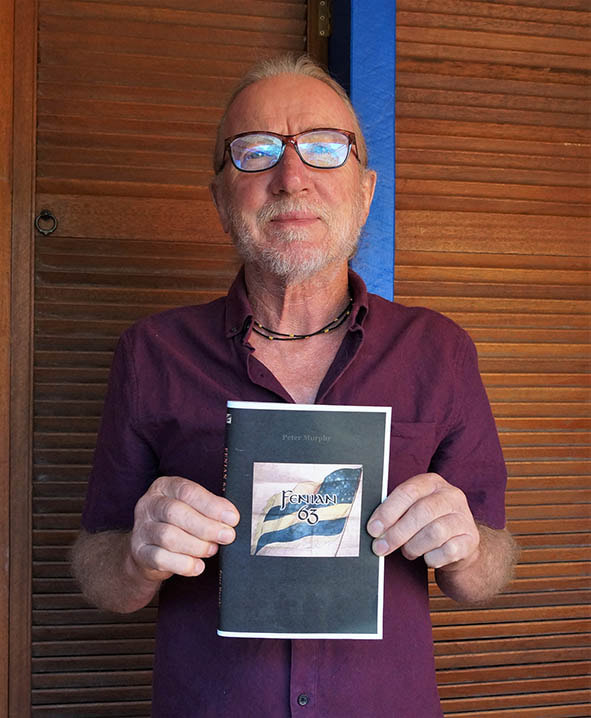
Fenian 63: introduction
During the Irish Uprising of 1865-67, hundreds of Irish rebels (Fenians) were arrested by the British government, and tried and sentenced for treason. Many were enlisted in the British army. Of those Fenians charged and sentenced, 62 were documented (prison/shipping records) as having being transported to Western Australia (Oct 1867) on the last convict ship (Hougoumont) to Australia.

James Jeffery Roche, biographer and friend for more than 20 years of the most celebrated Fenian transported on the Hougoumont, John Boyle O’Reilly, who had free access to O’Reilly’s printed and private papers, mentions in O’Reilly’s biography (John Boyle O’Reilly – His Life, Poems and Speeches) there were 63 Fenians onboard the Hougoumont, not 62.


Fenian Eugene Lombard (also transported on the Hougoumont), in a letter written home to his mother (January 1868), mentions there were 64 Fenians transported.  
Interested in such things, and having my first novel Fenian Fear published in 2018, I decided to research whether there was more Fenians transported on the Hougoumont than first documented.

I crossed and double checked the names of those Fenians arrested during the 1866/67 Irish Uprising including their date and places of birth, places arrested, places tried, sentencing reports, and prison records, while also matching their names against the names of those Fenians transported on the Hougoumont, at the same time being mindful that some of them – rather than use their real names – used aliases.

My research however proved inconclusive.
​
But what if there was a 63rd Fenian onboard the Hougoumont? 
This vexing question would inspire me to pen Fenian 63, and as the title suggests: adds a fictional 63rd Fenian transported on the Hougoumont. 

I’ve given him the name of James Doyle, a 22-year-old Irishman from County Wicklow, who at the age of 19, joined the British Army, and later caught up in the 1866/67 Irish Uprising.

Also on board the Hougoumont and disguised as a warder, is a fictional detective from Scotland Yard by the name of Thomas Holmes. Holmes is a ‘Fenian Hunter’, (see my novel Fenian Hunter' published 2024) and whose mission is to spy on the transported Fenians before the convict ship departs England for the Swan River Penal Colony of Western Australia, and report back to his superior’s intelligence relating to possible planned Fenian attacks on the English mainland. 

Once the Hougoumont departs England, Holmes’ orders are to stay the course, and on his arrival in Western Australia, he’s also to investigate reports of inhumane treatment of convicts in the Swan River Penal Colony under the watch of Governor John Hampton. 

Meanwhile, a request from Scotland Yard to colonial authorities in Western Australian demanding that Doyle be returned to Dartmoor Prison to serve out the rest of his sentenced, only adds mounting pressure on the young Fenian to make a break for it.

But Doyle has no experience of the harsh Western Australian bush. So he befriends an aboriginal man by the name of Marluck – who under aboriginal law – also faces an uncertain future.

Together they must decide: allow the ‘laws of the land’ to decide their fate, or take fate into their own hands. Meanwhile, on their trail is, 'Fenian Hunter', Detective Sergeant Thomas Holmes.

Fenian 63: $30 (+ postage) and can be purchased by emailing: [email protected] or purchased at Fremantle Prison Souvenir Shop, Fremantle, Western Australia. 


Fenian Hunter: introduction
Fenian Hunter is based on extensive research and published accounts. However, some character names and locations have been changed for the purposes of dramatisation. 
During the Irish uprising 1865-67, two Irish nationalist movements merged; the Fenian Brotherhood in America; and Irish Republican Brotherhood in Ireland. Together they had one goal: rid Ireland of the English scourge that had shackled them and their ancestors for over 500 years.
The FB, made up of ex-Confederate and Union soldiers (with Irish heritage) from the American Civil War, landed in Ireland during the uprising to support their rebel comrades in the IRB.
The IRB, formed in Ireland from previous failed uprisings, saw in the FB an opportunity to bolster their home-grown rebels with disciplined battle-hardened-men, unafraid to stick the bayonet in. Collectively they became known as Fenians, after a band of ancient Irish warriors known as the Fianna.
Due to the Fenians being infiltrated by British spies, the 1866/67 Uprising failed, thereby resulting in hundreds of Fenians being arrested and charged with treason. After a series of ‘kangaroo court’ proceedings, many were imprisoned in some of Britain’s most notorious jails, while sixty two were transported to the Swan Penal Colony of Western Australia.
For my second novel, Fenian 63 (published 2021), I concentrated my research on the sixty two Fenians transported to Western Australia, including introducing a fictitious sixty third Fenian, James Doyle. I also introduced Detective Sergeant Thomas Holmes, a Fenian Hunter.
Holmes carried a dark secret from Fenian 63: his involvement in the escape of Doyle, who ended up with murdered, Sergeant John Kelly’s revolver, later found on the body of renegade Fenian gunrunner, John O’Mahony.
Holmes (post Fenian 63) also had unfinished business to do with a man referred to as the Captain, and on whether he was a high-ranking member of a Fenian society, or a private mercenary, Holmes was none the wiser, but certain they’d eventually cross paths.
Meanwhile, back in Ireland and England, the British government under immense pressure from Irish nationalists and international human rights groups, demanded that all Fenians incarcerated in British prisons be released under a Conditional Pardon, capitulated.
This placed Holmes in a pickle, for should a planned visit to Western Australia by Queen Victoria’s second son, Prince Alfred, Duke of Edinburgh coincide with their release, the ghost of alleged Fenian assassin, Henry James O’Farrell could come back to haunt him. (See Fenian Fear published 2018, where O’Farrell attempted to murder Prince Alfred, at Clontarf, Sydney in March1868).
Holmes was also dealing with another pickle: arrival in Western Australia of a feisty Irish woman hell-bent on revenging the man she believed had murdered her father during a Fenian munitions smuggling operation at Cape Riche, east of King George Sound (now Albany).
 
Packed with characters straight out of a Patrick O’Brian novel, Fenian Hunter takes the reader on an exhilarating roller-coaster-ride into the heart of Australian colonialism, convict transportation, aboriginal culture, shadowy world of Fenianism, and barbarity of men.

Fenian Hunter: $25 (plus postage) and can be ordered by emailing: [email protected] or purchased at Fremantle Prison Souvenir Shop, Fremantle, Western Australia. 

Fremantle to Freedom: introduction
Fremantle to Freedom (published Feb 2026) is a collaboration between myself and Perth singer/songwriter and publisher Fred Rea.
                 
What became of the ‘Catalpa 6’ after their daring prison escape you may ask?

When six Irish political prisoners (Fenians) made a daring escape from Western Australia in 1876, little is known of what became of them after their arrival in America. Did they return to Ireland? Marry and have a family? Go back to their revolutionary ways? Live a long and fruitful life? Live long enough to see Ireland win its independence from Great Britain? All questions scholars, historians, and lay historians never asked or unable to answer. That is up till now.

Fremantle to Freedom (120 page coffee-table-book) written and edited by Irishmen, Peter Murphy and Fred Rea – who for over thirty years collectively and meticulously researched the famous Catalpa Escape – may help answer some of those vexing questions.

Told through the eyes of the last surviving member of the Catalpa 6, James McNally Wilson, chapter by chapter, Peter and Fred’s book intertwines fact and fiction, while taking the reader on a journey rarely spoken or written about.

Fremantle to Freedom begins with Wilson’s childhood in Ireland; how he ended up a British soldier; how in 1864 he recited the Fenian oath in a Dublin tavern; his arrest for treason in 1866; his court martial; his imprisonment in some of Britain’s most notorious jails; his transportation to Western Australia on the convict-ship Hougoumont; serving time in Fremantle Prison; working on convict-chain-gangs in the bush; how he and his comrades escaped from Fremantle Prison; their voyage to America on the Catalpa; what became of him and his five comrades when in America, including those who helped mastermind  their escape. Filled also with photographs, illustrations, maps, newspaper articles, letters, yarns, songs, and poetry, the book takes the reader on a journey that not only adds another page to one of the most daring prison escapes in Australia’s colonial history, but written and presented in a way that will leave the reader wanting to learn more.  

Copies of Fenian Fear, Fenian 63, and Fenian Hunter can be purchased at Fremantle Prison Souvenir Shop, Fremantle Visitor Centre, New Edition bookstore, High St. Fremantle, and Bunbury Museum and Heritage Centre. 

Copies of Fremantle to Freedom: $55 (plus postage) can be ordered by emailing: [email protected] or [email protected]

Special offer: purchase a copy of Fenian Fear, Fenian 63 and Fenian Hunter for $60 (+ postage), and receive a free booklet on Irish poet and patriot John Boyle O'Reilly. 
To order email: [email protected]

Special offer: purchase a copy of Fremantle to Freedom for $55 and receive a free booklet: Memoir of John Devoy and the Catalpa Rescue.  

The Authors:
Peter Murphy was born in Dublin, Ireland in the 1950s and emigrated to Australia in 1970. Peter lectured for several years in Ecologically Sustainable and Cultural Tourism at South West College of TAFE, Bunbury, Western Australia (WA), and worked several years as a Conservation and Heritage Officer with the National Trust (WA). He wrote articles and essays for the National Trust (Australia) periodical, as well as poetry, short stories and articles for The Irish Scene magazine (Perth, WA).
Peter retired from working life in 2016 and now lives on a nature reserve in the jarrah forest in the South West of WA with his partner Sallie and where he spends most of his time writing and educating visitors to be kind to Mother Nature. 
 
Fred Rea arrived in Western Australia in 1972 from his native Cork City, Ireland, bringing with him a deep love of music, history and the printed word. Fred served his apprenticeship in the printing trade as a compositor; a craft that shaped his lifelong engagement with publishing and storytelling.
 
Soon after arriving in WA, Fred joined a local Irish Australian folk band, recording two albums. Still a keen musician and collector of songs, Fred has a particular passion for ballads connected to the Fenians and famous Catalpa Rescue. This musical and historical legacy continues through his daughter Fiona, a highly successful songwriter and performer.
 
In 1998, Fred founded The Irish Scene magazine he produced for 20 years and where his interest in Irish Australian history deepened. This saw him work closely with Irish Australian historians, contributing to research and publication of numerous books and periodicals.
 
Fred is Chairperson of the WA Irish Bride Ships Legacy Project and WA Irish Famine Commemoration in Subiaco WA.
 
Now living in Perth’s northern suburbs, with his partner of 50 years, Lilly, Fred continues his dedicated research into Irish and Australian history.

Other literary contributions by the same authors: 
  • Fenian Fear (novel).
  • In Search of the Vigilant (short film). See youtube.
  • A Brief History of John Boyle O’Reilly (booklet).
  • Escape (multi media: music, poetry, film and drama) based on the life and times of Irish patriot and poet, John Boyle O’Reilly.
  • The Trial of Dwert the Fox (children’s book).
  • Award winning poems: Mother of Arcadia and Roo and Me.
  • Fenian 63 (novel).
  • The Trials of John Boyle O'Reilly (play production).
  • Fenian Hunter (novel).
  • Fremantle to Freedom (120 page coffee-table-book).
  • Peter also assisted Australian author Peter Fitzsimons research his book The Catalpa Rescue. 


Picture
Picture
Picture
Peter Murphy
Picture
Powered by Create your own unique website with customizable templates.